Partner Theo Schücking, Hedwig Kym
Queer Places:
Marschlins Castle, 7302 Landquart, Switzerland
University of Zurich, Rämistrasse 71, 8006 Zürich, Switzerland
Villa Helios, Via Croce, 4, 80076 Capri NA
Friedhof Daleu, Rheinstrasse 26, 7000 Chur, Switzerland
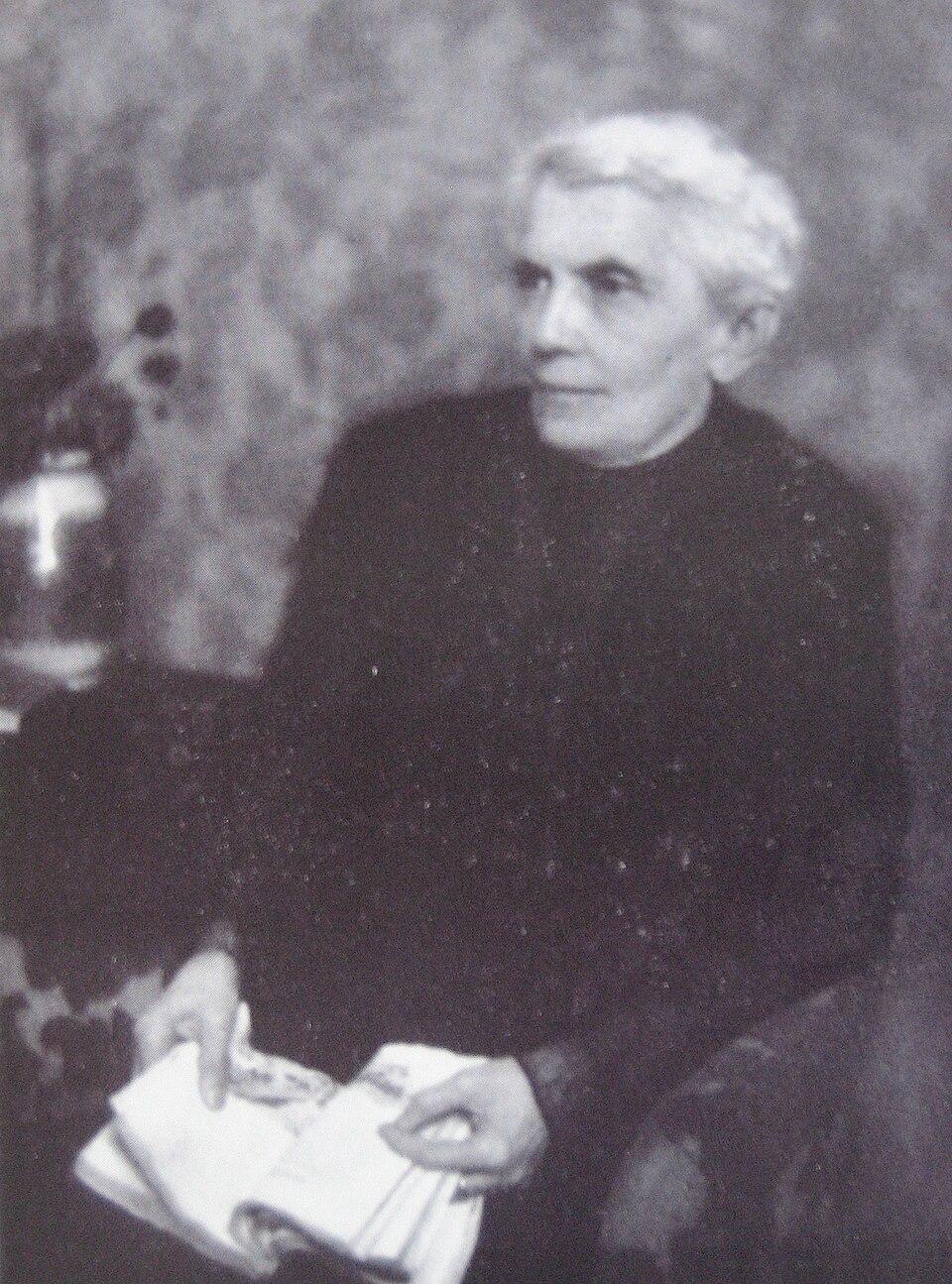 Barbara Margaretha "Meta" von Salis-Marschlins (March 1, 1855 - March 29, 1929) was a pioneering Swiss historian, radical feminist writer, and passionate advocate for
women's suffrage. Hailing from one of Switzerland's oldest aristocratic families, she broke conventional barriers to become the first woman to earn a doctorate from the
University of Zurich's Philosophical Faculty. Throughout her life, she combined a deep commitment to social justice with an unapologetic aristocratic bearing and openly
lived lesbian relationships that defied the rigid norms of 19th- and early 20th-century Europe.
Barbara Margaretha "Meta" von Salis-Marschlins (March 1, 1855 - March 29, 1929) was a pioneering Swiss historian, radical feminist writer, and passionate advocate for
women's suffrage. Hailing from one of Switzerland's oldest aristocratic families, she broke conventional barriers to become the first woman to earn a doctorate from the
University of Zurich's Philosophical Faculty. Throughout her life, she combined a deep commitment to social justice with an unapologetic aristocratic bearing and openly
lived lesbian relationships that defied the rigid norms of 19th- and early 20th-century Europe.
Meta von Salis was born on March 1, 1855, at Marschlins Castle in Igis, in the Swiss canton of Graubünden. She was the youngest daughter of Ulysses Adalbert von
Salis-Marschlins (1795–1886) and Margareta von Salis-Maienfeld (1810–1895). Growing up in an isolated, conservative aristocratic household, she was educated primarily in
traditional Swiss and German boarding schools—institutions she later criticized as restrictive "housewife-breeding establishments" meant to subdue independent thought.
Refusing to yield entirely to domestic expectations, she educated herself extensively and initially worked as a governess in Germany, England, and Ireland between 1874 and
1883.
Between 1878 and 1879, while staying in Rome with the famed German writer and idealist Malwida von Meysenbug, Meta von
Salis met Theophanie "Theo" Schücking, the daughter of the prominent German author Levin Schücking.
The two women formed an intense, romantic attachment, meeting nearly every day during their time in Rome and maintaining a passionate correspondence afterward. Theo
Schücking wrote to Meta that their connection had become an absolute necessity of her inner life rather than a casual social engagement.
Despite their deep affection, the relationship faced heavy familial pressures. Theo's life was tightly controlled by her father, Levin Schücking, who ultimately
intervened and demanded Theo's presence and obedience for his own household plans. Despite Theo’s attempts to resist, the relationship was forced to a painful end, and the
two separated in 1883.
Following her separation from Schücking, Meta von Salis boldly redirected her energy into academia. In 1883, she enrolled at the University of Zurich, studying history,
philosophy, art history, and jurisprudence.
In 1887, she successfully defended her doctoral dissertation on Agnes von Poitou, earning a Ph.D. and achieving the historic milestone of becoming the first female doctor
of history in Switzerland.
She emerged as a radical voice for women's rights, publishing fiery essays and lectures such as Die Zukunft der Frau (The Future of Woman, 1886) and Agitation für das
Frauenstimmrecht (Agitation for Women's Suffrage).
She famously campaigned for the legal defense and release of early female medical pioneers and activists in Switzerland, displaying a fierce, unyielding attitude toward
institutional misogyny.
Beyond her feminist work, she was a notable intellectual interlocutor, maintaining a complex correspondence with philosopher
Friedrich Nietzsche and his sister Elisabeth Förster-Nietzsche.
While studying in Zurich, Meta met Hedwig Kym, the daughter of philosophy professor Ludwig Kym. This meeting blossomed into a
lifelong partnership.
The two women shared a domestic and intellectual life together, dividing their time between Salis's ancestral home at Castle Marschlins, a period of self-imposed exile in
Capri (Villa Helios) from 1903 to 1910, and later settling in Basel. Though Hedwig Kym entered a brief marriage of convenience with
Ernst Feigenwinter in 1910 (which ended with his death in 1919), she and Meta remained primary companions until Meta's
death.
Meta von Salis spent her final decades writing, reflecting, and managing her estate. She passed away on March 29, 1929, in Basel.
As a wealthy, aristocratic lesbian who refused to marry a man, Meta von Salis-Marschlins used her socioeconomic privilege to carve out an independent existence. She
remains remembered as a trailblazing figure in Swiss historiography, an uncompromising pioneer of early European lesbian visibility, and a foundational architect of the
Swiss women's suffrage movement.
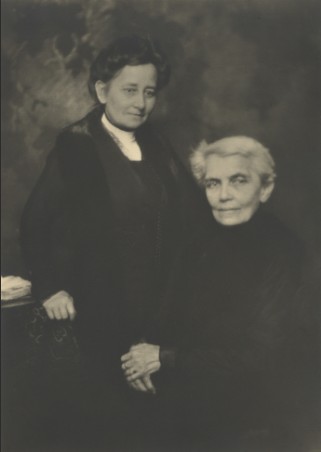
Meta von Salis-Marschlins and Hedwig Kym

Villa Helios, Capri
References:
- Salis-Marschlins, Meta von. Die Zukunft der Frau (The Future of Woman). 1886
- Salis-Marschlins, Meta von. Agitation für das Frauenstimmrecht. 1888
- Salis-Marschlins, Meta von. Agnes von Poitou. Doctoral Dissertation, University of Zurich, 1887
- Salis-Marschlins, Meta von. Philosoph und Edelmensch: Ein Beitrag zur Charakteristik Friedrich Nietzsches. Schutterwald: Wissenschaftlicher Verlag, 2000
- Bollinger, Andrea. "Salis, Meta von (Marschlins)." Historical Dictionary of Switzerland (HDS), 2011
- Diethe, Carol. Historical Dictionary of Nietzscheanism. Scarecrow Press, 2013
- Young, Julian. Friedrich Nietzsche: A Philosophical Biography. Cambridge University Press, 2010
- Salis, Barbara Margaretha von. Biographical files and archival collections housed at the Swiss Social Archives (Sozialarchiv Zürich) and the Nietzsche-Archiv documentation collections.
Support this project
This website is a passion project researched, developed, and funded entirely by me. If you find the content valuable and would like to help support the ongoing research and hosting costs, any contribution is deeply appreciated.
Thank you for keeping this independent resource alive!
My books on Amazon: Elisa Rolle's books
BACK TO HOME PAGE